Most washers last about 10 to 14 years, and most dryers last about 10 to 13 years, depending on how hard they work and how well they’re cared for. If your machine is past the halfway point of that range and the repair would cost more than half the price of a new one, replacing it is usually the smarter buy.
That’s the short answer. The real answer depends on your machine, your household and what’s actually wrong with it. Since 1952, families across eastern North Carolina have brought this exact question to our showroom and our service department in Greenville. Here’s how we help them think it through.
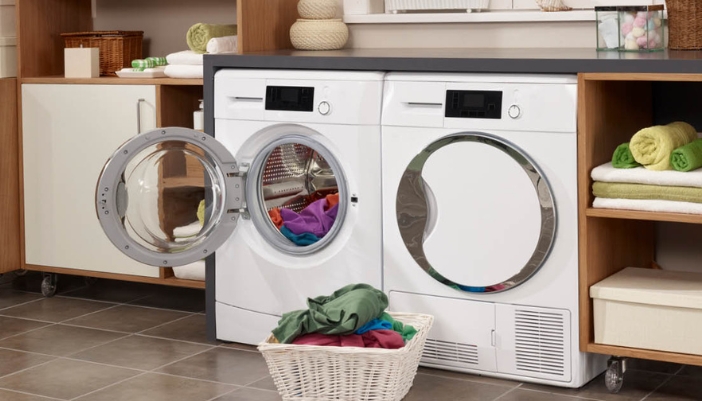
How long does a washing machine last?
A washing machine typically lasts 10 to 14 years. Where yours lands in that range comes down to a few everyday habits:
- How much it runs. ENERGY STAR estimates the average American family washes about 300 loads a year. A busy household with kids and sports uniforms can easily run more, and every extra load adds wear.
- Overloading. Stuffing the drum strains the motor, suspension and bearings.
- Detergent. Too much soap, or regular detergent in a high-efficiency (HE) washer, leaves residue that leads to odors, sensor problems and buildup.
- Care. Front-load washers last longer when you leave the door cracked after a cycle so the seal can dry out.
Top-load washers with simpler mechanics tend to sit toward the longer end of the range. Front-load washers clean more efficiently but need a little more attention to door seals and bearings.
How long does a dryer last?
A dryer typically lasts 10 to 13 years. Dryers are simpler machines than washers, and many common failures come down to inexpensive parts like belts, rollers or heating elements.
The biggest threat to a dryer’s lifespan is lint. A clogged lint screen or a crushed, kinked or lint-packed vent makes the dryer run hotter and longer than it should. That wears out parts faster and creates a real fire risk. According to the U.S. Fire Administration, failure to clean is the leading factor in home dryer fires, and those fires climb during the fall and winter months. If you only do one thing this season, clean the lint screen every load and have the vent checked.

Washer and dryer lifespan at a glance
Washers: Most last 10 to 14 years. Repairs that are usually worth it include the drain pump, lid or door switch, water inlet valve and door latch. Worn tub bearings, a failed transmission, or a bad control board on an older machine often mean it’s time to replace.
Dryers: Most last 10 to 13 years. Repairs that are usually worth it include the belt, idler pulley, drum rollers, thermal fuse and heating element. A failed drive motor or control board on an older machine, or repeated overheating, often means it’s time to replace.
Signs your washer is wearing out
- Water pooling under or around the machine
- Loud banging, grinding or roaring during the spin cycle (often worn bearings)
- Clothes coming out soaking wet or the washer not draining
- A musty smell that cleaning cycles don’t fix
- The same error code coming back after it’s been cleared
- Rust on the cabinet or inside the drum
Signs your dryer is wearing out
- It takes two or more cycles to dry a normal load
- The top of the dryer or your clothes feel unusually hot
- A burning smell (stop using it and call for service)
- Squealing, thumping or scraping while it tumbles
- It runs but won’t heat, or heats but won’t tumble
Longer drying times don’t always mean the dryer is failing. A blocked vent is one of the most common causes, and it’s an easy fix. Check that first.
Repair or replace? Use the 50% rule
The 50% rule is the simplest way to decide. Ask two questions:
- How old is the machine compared to its expected lifespan?
- How does the repair cost compare to the price of a comparable new machine?
If the machine is past the halfway point of its life and the repair costs more than 50% of a new one, replace it. If the machine is young, repair it in almost every case.
Here’s how that plays out by age:
- Under 5 years old: Repair. Check your manufacturer’s warranty or extended protection plan first, since the fix may be covered.
- 5 to 9 years old: It depends on the repair. A single worn part is usually worth fixing. A major component deserves a side-by-side comparison with the price of new.
- 10 years or older: Lean toward replacing, unless the repair is minor and the machine has otherwise been reliable.
A few other factors can tip the decision:
- Repeat repairs. If this is the second or third service call in a couple of years, more are likely coming.
- The other half of the pair. If your washer fails at 12 years old, your dryer is probably close behind.
- Operating costs. ENERGY STAR certified washers use about 20% less energy and about 30% less water than standard models. A full-size certified washer uses about 14 gallons per load compared to about 20 for a standard machine, and over its lifetime can save about $530 in energy costs.
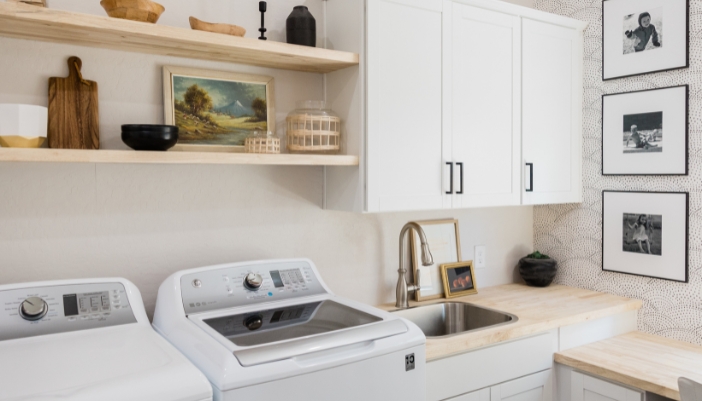
Should you replace your washer and dryer at the same time?
You don’t have to, but it often makes sense when both machines are the same age. Buying a matched laundry pair gives you capacities that work together, a consistent look, and one delivery and installation instead of two. Pairs are also frequently part of manufacturer rebates, so ask about current laundry promotions before you buy.
What to look for in a new washer or dryer
- Capacity that fits your household. A family of five needs a bigger drum than a couple. Bring your typical load size to the showroom and we’ll help you match it.
- Front-load or top-load. ENERGY STAR front-load washers use about 50% less energy and water than traditional top-load agitator models. Top-load machines are easier on your back and often faster.
- Gas or electric dryer. Match your home’s hookup, and ask us if you’re thinking about switching.
- Your space. If your laundry area is tight, look at stackable laundry centers and washer dryer combos.
- Professional installation. Our delivery team installs and tests your new washer or dryer, removes all packing materials, and delivers Monday through Saturday.
- Protection after the warranty. Our Expert Protection plans cover parts and labor on covered repairs after the manufacturer’s warranty ends.
Repair or replace: Greenville Appliance can help either way
Most stores can only sell you something new. We can do both. Our service technicians are certified with all major appliance manufacturers and work on washers and dryers in or out of warranty, backed by a parts department with thousands of parts in stock. If your machine is worth saving, we’ll fix it. If it isn’t, we’ll tell you so.
When it’s time for something new, visit our showroom at 200 South East Greenville Boulevard in Greenville, or call (252) 756-2616. Our sales team will help you compare models from brands like Maytag, Whirlpool, LG, Samsung and GE, walk you through current rebates and financing options, and set up delivery and installation. We’re proud to serve Greenville, Rocky Mount, Kinston and families all across eastern North Carolina.
Sales floor hours: Monday to Friday 8:30 a.m. to 5:30 p.m., Saturday 10 a.m. to 2 p.m.
Service department hours: Monday to Friday 8:30 a.m. to 5:30 p.m.
Frequently asked questions
Most washing machines last 10 to 14 years. Heavy use, overloading and using the wrong detergent can shorten that, while regular care helps a washer reach the upper end of the range.
Most dryers last 10 to 13 years. Cleaning the lint screen after every load and keeping the vent clear are the best ways to extend a dryer’s life and reduce fire risk.
Only if the repair is minor. After 10 years, a washer is near the end of its typical lifespan, so if the repair costs more than half the price of a comparable new washer, replacing it is usually the better value.
The 50% rule says to replace an appliance when the repair costs more than 50% of a comparable new model, especially if the appliance is past the halfway point of its expected lifespan.
Greenville Appliance & Mattress, family-owned since 1952, repairs washers and dryers in or out of warranty and sells new laundry appliances with delivery and installation. Visit 200 South East Greenville Boulevard or call (252) 756-2616.